In the Intensive Care Unit (ICU) and Operating Theater (OT), the Arterial Blood Gas (ABG) Analyzer is the most critical diagnostic tool available to a clinician. While a standard lab test might take an hour, an ABG provides results in 60 seconds. These 60 seconds can determine if a patient needs a ventilator, a change in oxygen therapy, or immediate metabolic intervention.
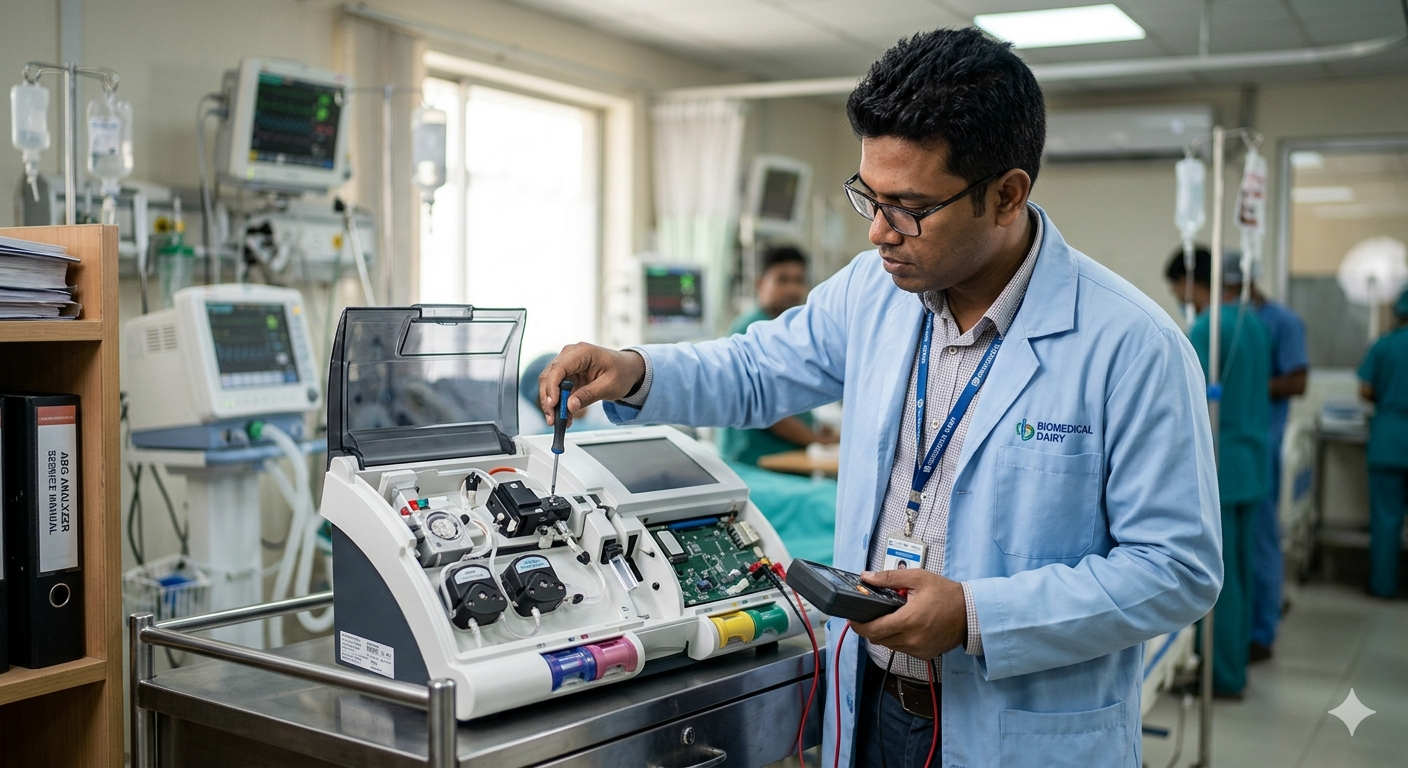
As a Biomedical Engineer working in the field since 2017, I have found that ABG machines are the ultimate test of an engineer’s skill. They combine complex fluidics, sensitive electrochemical sensors, and precise thermal control. In this guide, I will break down how these machines work, the common “Service Required” traps, and our essential role in keeping them life-ready.
1. What Does an ABG Analyzer Actually Measure?
An ABG analyzer provides a “snapshot” of a patient’s respiratory and metabolic status. The primary parameters include:
-
pH: Measures the acidity or alkalinity of the blood.
-
pCO_2 (Partial Pressure of Carbon Dioxide): Indicates how well the lungs are removing CO_2.
-
pO_2 (Partial Pressure of Oxygen): Indicates how well the lungs are oxygenating the blood.
-
Electrolytes & Metabolites: Modern “Critical Care” analyzers also measure Na+, K+, Cl-, Ca{++}, Glucose, and Lactate.
For us engineers, each of these is a different type of sensor requiring different maintenance logic.
2. The Science of the Sensors: How the “Magic” Happens
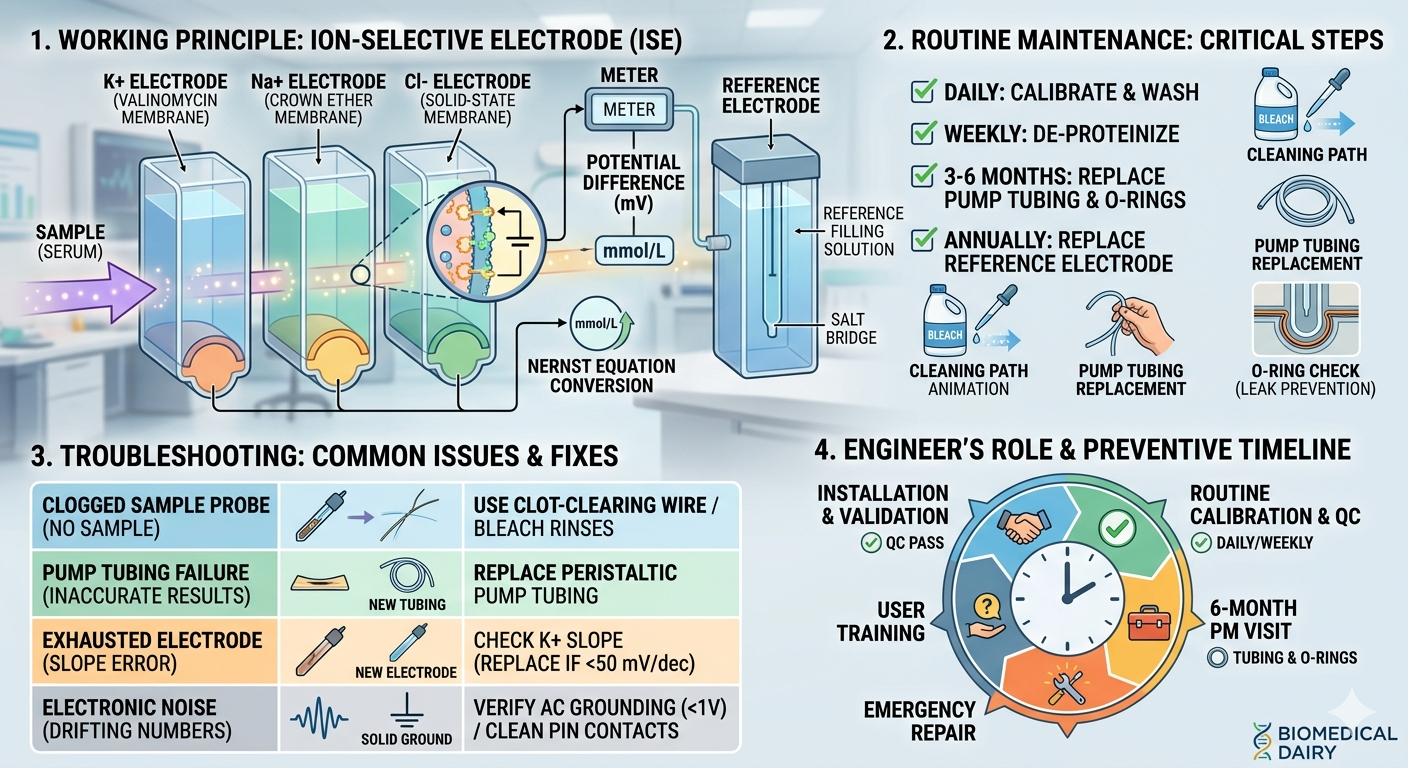
To repair an ABG, you must understand the three different types of electrodes inside the measuring chamber:
A. The pH Electrode (Sanz Electrode)
This is a glass electrode. It uses a special pH-sensitive glass membrane to measure the hydrogen ion activity. Like the electrolyte analyzer, it relies on a Reference Electrode to create a stable baseline.
B. The pCO_2 Electrode (Severinghaus Electrode)
This is essentially a pH electrode modified with a CO_2-permeable membrane (usually Teflon or Silicone). When CO_2 diffuses through the membrane into a bicarbonate solution, it changes the pH. The machine measures that pH change and converts it to pCO_2.
C. The pO_2 Electrode (Clark Electrode)
This is different. It is a Polarographic electrode. It uses a gold or platinum cathode and a silver anode. Oxygen diffuses through a membrane and is “reduced” at the cathode, creating a current. The more oxygen, the higher the current.
3. The Role of the Biomedical Engineer in ABG Maintenance
In my years of service, I’ve realized that ABG machines are “living” instruments. They require constant attention.
Thermal Control: The 37°C Rule
Human blood gases are extremely temperature-dependent. A change of just 1°C can significantly alter pO_2 and pCO_2 readings. As engineers, we must ensure the Heating Block is calibrated to exactly 37.0°C. If the heater fails or drifts, the entire machine becomes a liability.
Gas Calibration
Unlike electrolyte machines that only use liquid standards, ABG machines use precision gas cylinders or CO2/O2 mixing chambers. We must ensure the gas regulators are set correctly and that there are no leaks in the internal gas lines.
Software and Connectivity
Modern ABG units (like those from Radiometer, Werfen, or Roche) are often connected to the Hospital Information System (HIS). We manage the LIS/HIS interface to ensure that a critical result at the bedside is instantly visible to the doctor on their computer.
4. Troubleshooting: The Engineer’s Field Guide
When the “System Error” light flashes in the ICU, don’t panic. Follow this engineering hierarchy:
I. The “Air Bubble” Enemy
In an ABG machine, air is the enemy. If a tiny air bubble gets trapped against the pO_2 sensor, the reading will be falsely high (approaching atmospheric oxygen levels).
-
The Fix: Check the sample probe and the waste line. Usually, a worn-out pump tube or a dried-out O-ring is allowing air to “leak” into the fluidic path.
II. The “Fibrin” Blockage
Because ABG uses whole arterial blood (which clots faster than venous blood), blockages are frequent.
-
The Fix: If the sample isn’t moving, check the Pre-heater or the Cuvette. I always carry a specialized cleaning solution. If you use a wire, be extremely careful—the membranes on pO_2 and pCO_2 sensors are as thin as a hair and very expensive to replace.
III. Drift and Calibration Failures
If the pH is drifting, it’s usually the Reference Electrode.
-
The Fix: Check the Reference Filling Solution (usually KCl). If the salt bridge is crystallized, flush it with warm deionized water. If the pO_2 fails calibration, the membrane might be “poisoned” by protein buildup and needs a dedicated cleaning cycle.
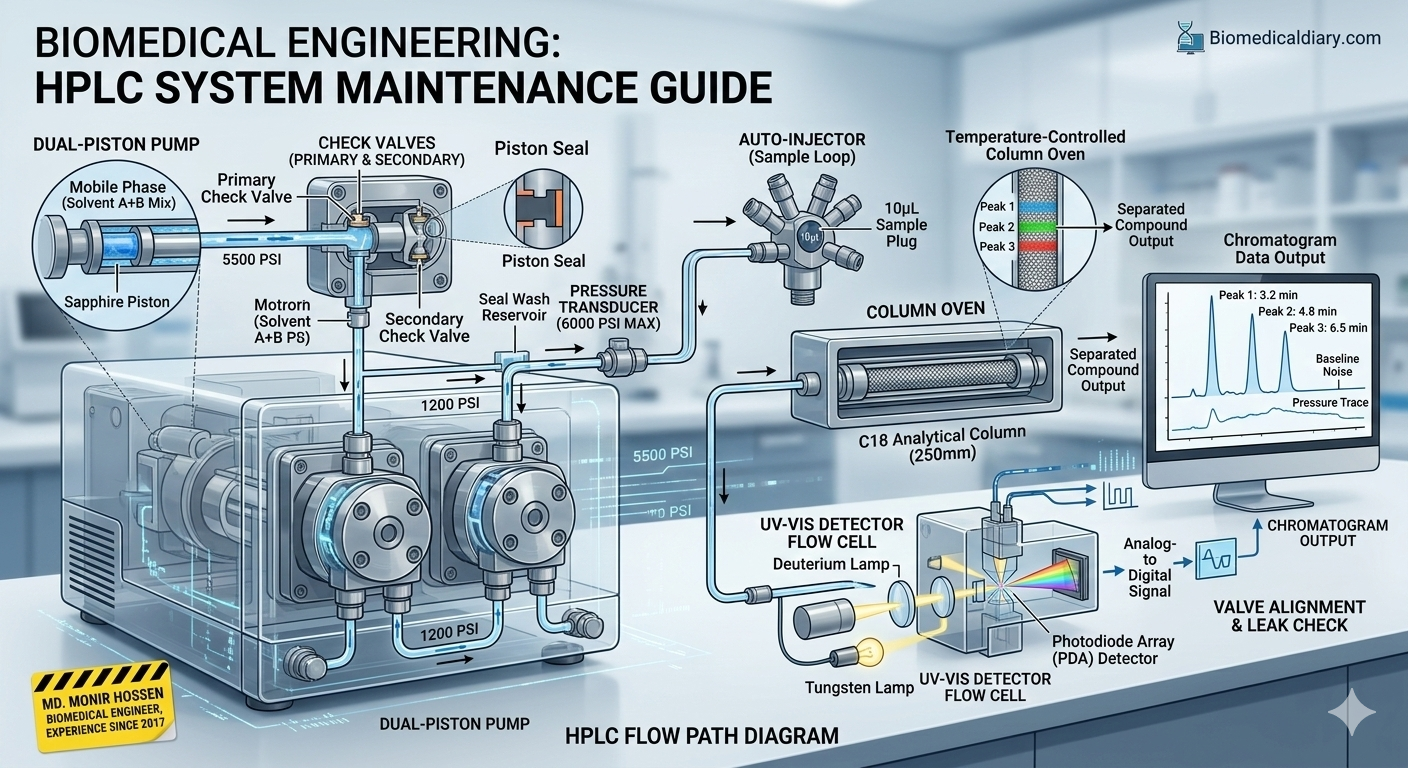
5. Non-Human Technical Diagram: ABG Fluidic & Sensor Path
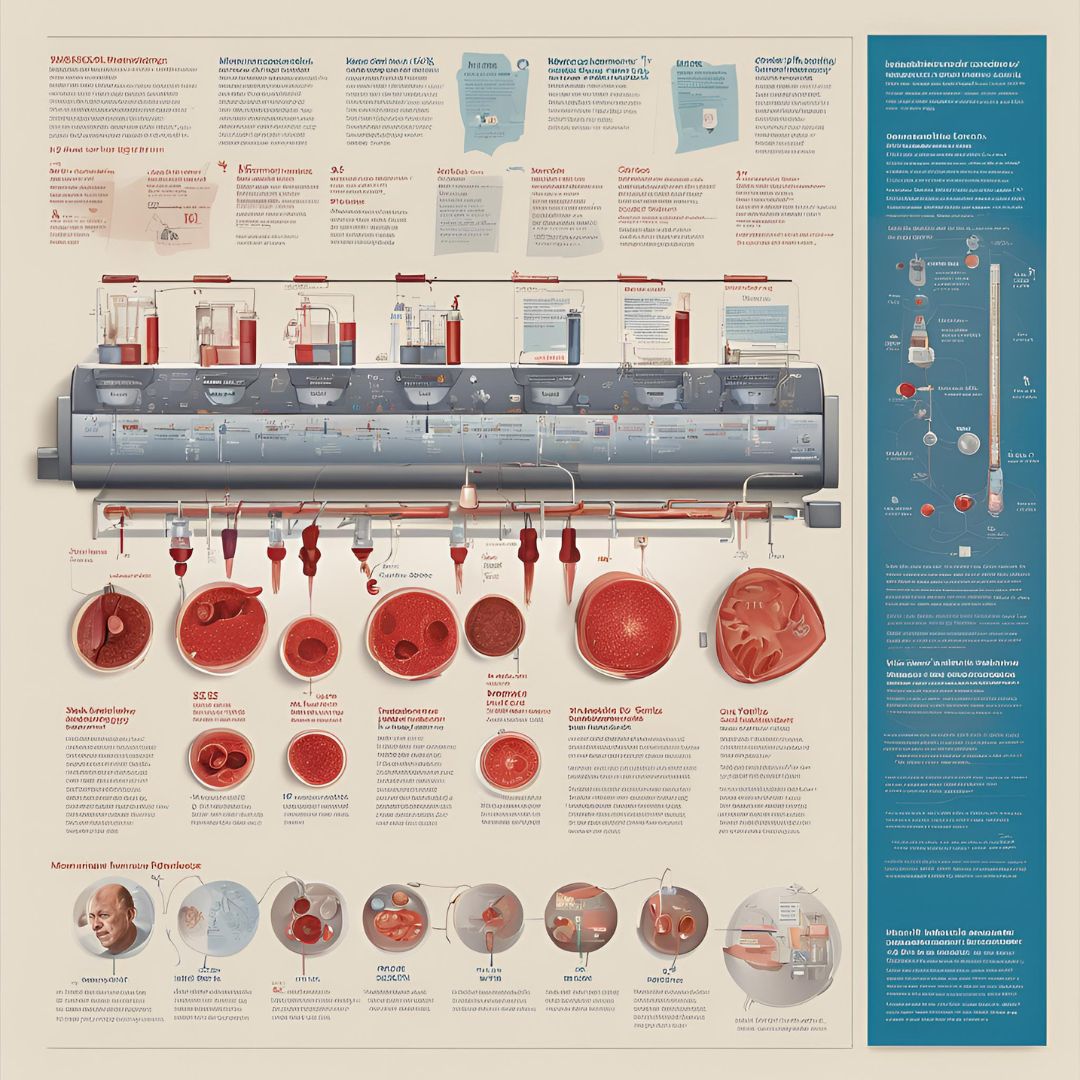
To help you visualize the service points, I have created this technical layout. This is what you should look for when you open the machine casing.
6. Preventive Maintenance (PM) Checklist for 2026
If you want to reduce emergency breakdowns, stick to this professional schedule that I’ve developed over years of field experience:
| Frequency | Engineer Task |
| Daily | Verify 1-point and 2-point calibrations; check reagent levels. |
| Monthly | Perform a “Deep Clean” of the measuring chamber; check pump rollers. |
| Quarterly | Replace all peristaltic tubing. Check the temperature of the heating block with a NIST-traceable thermometer. |
| 6-Months | Replace the pO_2 and pCO_2 membranes (if the model is not cartridge-based). |
| Yearly | Full system validation; check gas regulators; replace internal battery backup. |
Conclusion
The ABG analyzer is a masterpiece of biomedical engineering. It bridges the gap between physics, chemistry, and life-saving medicine. As engineers, our role is to ensure that the delicate membranes and sensors inside these machines are always ready.
When we maintain an ABG machine, we aren’t just “fixing hardware”—we are ensuring that a doctor has the right information to save a life.